MRI & CTs for early detection

Designed to screen for signs of potential cancer and hundreds of medical conditions.

Don’t wait for symptoms

Advanced scans that screen for hundreds of conditions. Catch potential issues early—often before symptoms appear.

  • Safe: MRIs use magnets and radio waves to take images, so you aren't exposed to ionizing radiation.
  • Fast: MRIs take as little as 22 minutes to complete.
  • Powerful: Uses FDA-cleared AI image enhancement.
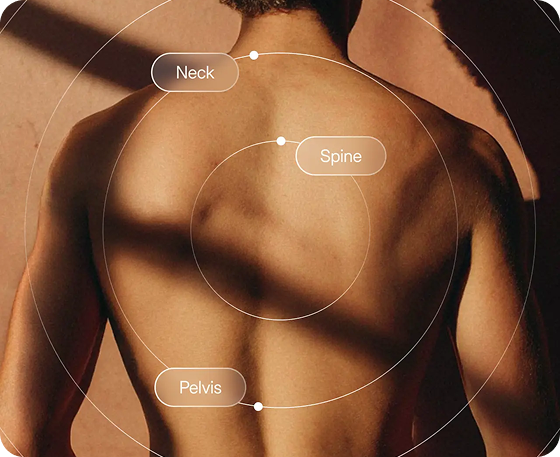
MRIs
HSA/FSA Eligible
MRI
Scans for signs of hundreds of potential conditions, including early signs of cancer of the brain, thyroid, liver, gallbladder, pancreas, spleen, kidneys, adrenal glands, bladder, ovaries, uterus, and prostate.
Time:
22 min

What's included:

  • Head
  • Neck
  • Abdomen
  • Pelvis
Also helps detect for signs of prior stroke, sinus inflammation, fatty liver, uterine fibroids, and abdominal aortic aneurysm.
What's not included:
Chest, Lungs, Heart, Breasts, Arms/Legs, Spine, Esophagus, Small intestine, Large intestine (including the colon)
This test does not include
Chest, Lungs, Heart, Breasts, Arms/Legs, Spine, Esophagus, Small intestine, Large intestine (including the colon)
HSA/FSA Eligible
MRI with Spine
Everything in the MRI, plus spine coverage to look for signs of spinal lesions and tumours, herniated discs, cervical spinal stenosis, spondylosis, fractures, scoliosis, arthritis, and other degenerative changes.
Time:
47 min

What's included:

  • Head
  • Neck
  • Abdomen
  • Pelvis
  • Spine
What's not included:
Chest, Lungs, Heart, Breasts, Arms/Legs, Esophagus, Small intestine, Large intestine (including the colon)
This test does not include
Chest, Lungs, Heart, Breasts, Arms/Legs, Esophagus, Small intestine, Large intestine (including the colon)
HSA/FSA Eligible
MRI with Skeletal and Neurological Assessment
Everything in the MRI with Spine, plus screening for signs of neurodegeneration in the brain and narrowing in the arteries of the head and neck, as well as a brain age analysis.
Time:
2 ~55 min sessions

What's included:

  • Head
  • Neck
  • Abdomen
  • Pelvis
  • Spine
  • Musculoskeletal Assessment (Hips/Knees)
  • MR Angiogram (Head/Neck)
  • Brain Analysis
  • Body Composition Profiling
Also includes body composition assessment (fat and muscle volume), hip evaluation (labrum, cartilage, and joint health), and knee scans (for meniscus, ACL, and MCL injuries).
What's not included:
Chest, Lungs, Heart, Breasts, Arms/Lower legs, Esophagus, Small intestine, Large intestine (including the colon)
This test does not include
Chest, Lungs, Heart, Breasts, Arms/Lower legs, Esophagus, Small intestine, Large intestine (including the colon)
CTs
HSA/FSA Eligible
Lung CT
This low-dose CT can help detect early signs of lung cancer, lung nodules or masses, emphysema, and other lung or airway abnormalities. May comment on overall heart size.
Time:
3 min

What's included:

  • Lungs and surrounding chest structures*
What's not included:
Breasts, Pancreas, Liver, Kidneys, Esophagus, Small intestine, Large intestine (including the colon)

This test does not include
Breasts, Pancreas, Liver, Kidneys, Esophagus, Small intestine, Large intestine (including the colon)

Why our members choose MRI and CTs

Download your MRI to share with your healthcare provider
Detailed report and insights

Receive findings unique to you and direct outreach if anything is urgent.

Function-exclusive AI technology

FDA-cleared, state-of-the-art AI image enhancement, 
as well as AI-assisted medical reports.

Personal Care Advisor

We’re here to support you at every step of your journey towards better health.

MRI protocols

We work with MRI technologists and scientific advisors 
to develop our own radiologist approved protocols.

Scans are changing the fight against cancer with an early and accurate look inside your body.

Andrew
Age 54

I’m a lifelong athlete and I’ve always taken my health seriously so I was shocked that my scan showed stage 3 kidney tumors on both kidneys. My physician says taking the scan has given me a chance for a longer life.

Sam
Age 72

The experience, price, and clinician notes are all phenomenal.

Mike
Age 45
true story

Proactive MRIs caught Holly’s cancer early—twice

MRIs gave Holly peace of mind, early answers, and the opportunity to reclaim her health—not once, but twice.

Function like Holly

FAQs

What is an MRI?

MRI stands for Magnetic Resonance Imaging. An MRI machine is a giant magnet that uses radio waves to take pictures of your body’s organs and structures. It’s safe, as long as you don’t have any metallic implants that are incompatible with MRI scanning (e.g. a pacemaker or certain metallic orthopedic implants). Because of the magnetic field, you may not wear any jewelry or clothing that have metallic components during your MRI.

How do Function members add an MRI or CT?

Add scans with your exclusive Function member pricing here. Sign in to your Function account and you'll be sent directly to choose your scan.

Are MRIs safe?

Yes, MRIs have been around since the 1980s and have a safe track record (and added bonus: pain-free). Unlike other medical imaging procedures such as CT (CAT scan) and X-ray, MRIs don’t expose you to ionizing radiation.

How long after my MRI do I get the results?

After you complete your MRI, you will receive your Function Report within 7-10 days of your MRI. You will receive an email when your report is ready. Your Radiology Report is typically made available prior to your full Function Report.

Is an MRI covered by insurance?

At this time, Function is offered directly to consumers, and you can use HSA/FSA dollars to pay for your MRI. We’re working with payers to get Function included in health plans. Sign up for our newsletter for updates on our insurance efforts.

What does the MRI look for?

Function is a service designed to screen adults (18 years and older) for early cancer and early disease and is for individuals who want to be proactive with their health and get an advantage by looking inside their body. We do this with MRI to quickly and accurately look at your major organs (aside from the breasts, lungs, and heart) from the top of your head to the base of your pelvis.

What is a CT? What is a low-dose CT (LDCT)?

CT stands for Computed Tomography. A CT scanner uses the combination of X-ray with computer processing to take pictures of your body’s organs and structures. Unlike MRI, it does require the use of ionizing radiation (X-rays), which is potentially harmful. An LDCT uses much less ionizing radiation than a regular CT. The LDCT is the gold standard for screening purposes for the lungs and is the CT imaging technique that Function uses.